
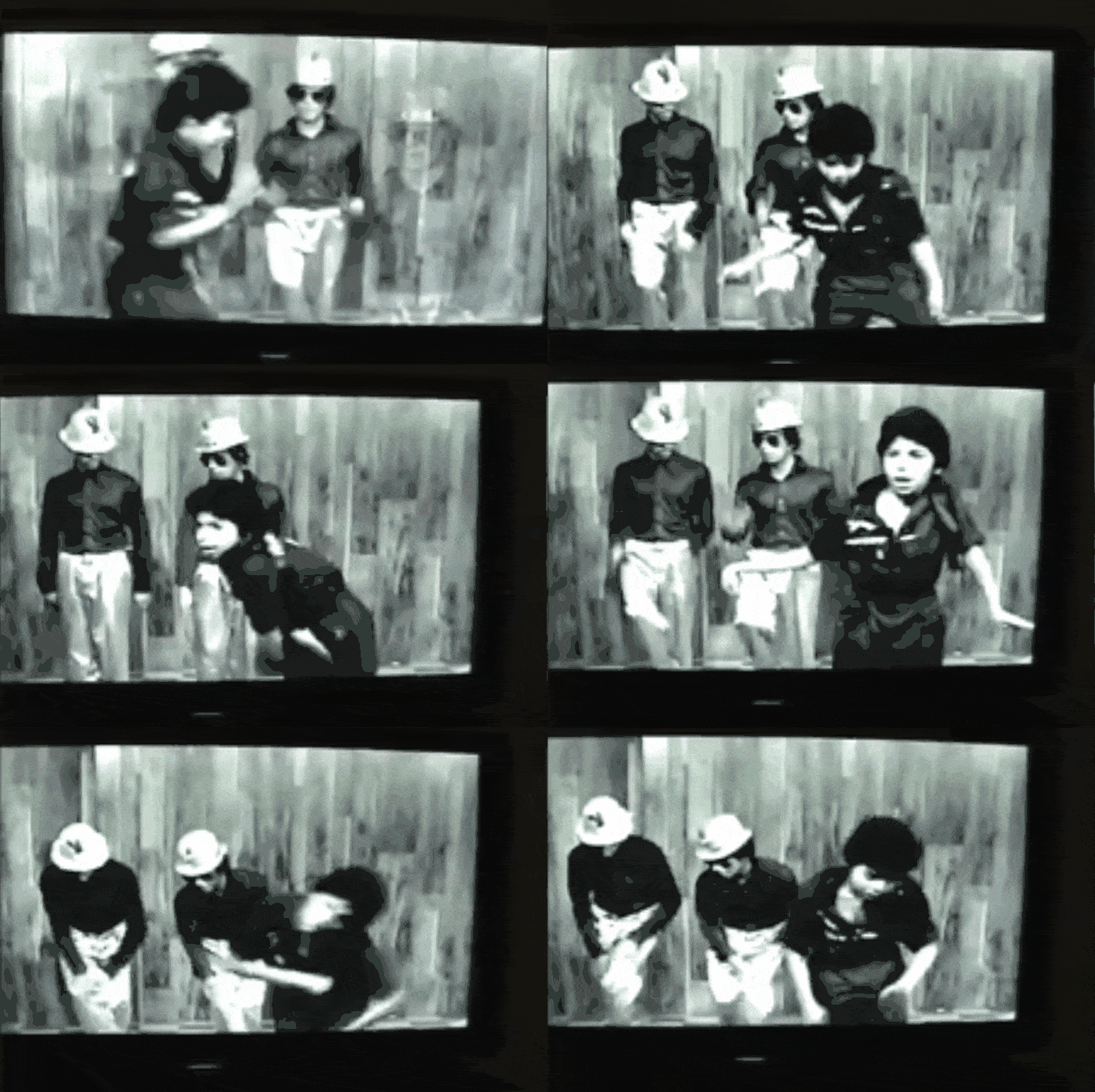
Working with elders and originators within street dance culture has been one of the most profound and challenging parts of my practice. Collaborating with Money B meant navigating the gaps that exist between oral tradition and contemporary modes of documentation, pedagogy, and digital distribution. Like many other OGs, Money B embodies a way of transmitting knowledge rooted in freestyle, intuition, style and presence, like how one carries themselves—all forms that resist codification.
My background, influenced by academia and cross-disciplinary art making, leans toward analysis, translation, and systems-building. These paradoxes raised questions like: how do you preserve the essence, soul, or spirit of something created to propel individuality and creative freedom, while structuring it into something as static as an online curriculum? How do you translate lineage without flattening it for consumption?
The tension became the work itself. The Money B Playbook emerged not as a perfect archive, but as an experiment that required developing trust, negotiating authorship, and designing a platform that could hold both of our ways of knowing—his embodied, communal wisdom and my research-based approach to pedagogy and structure.
Through this process I’ve come to see documentation not as extraction but as care: an act of tending to the memories, and lineages, the embodied wisdom contained within these dances, that are prone to erasure in a world that repeatedly commodifies, sanitizes, and overwrites. My work continues to move between dance, film, installation, always asking how dance remains one of the most sophisticated systems of memory we have
Ultimately, my process is cyclical: research becomes movement; movement becomes story; story becomes archive—and the archive, in turn, generates new understanding about what and how we inherit and evolve together.