Endangered Perspectives
Endangered Perspectives is a documentary conversation series that features practitioners and pioneers of predominantly Black American dance forms including those from street, club and other social contexts, across eras and regions in the United States. From elders of New York to younger innovators who shaped newer styles in the San Francisco Bay Area, Endangered Perspectives explores how dance responds to social, cultural, and technological change, and carries histories and collective memory as these are transmitted body to body, from generation to generation.
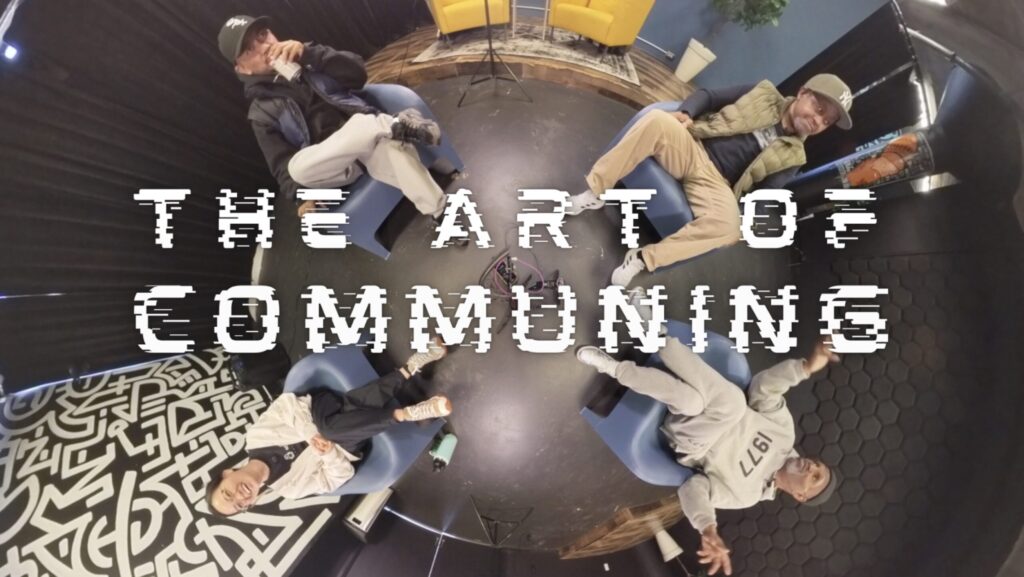
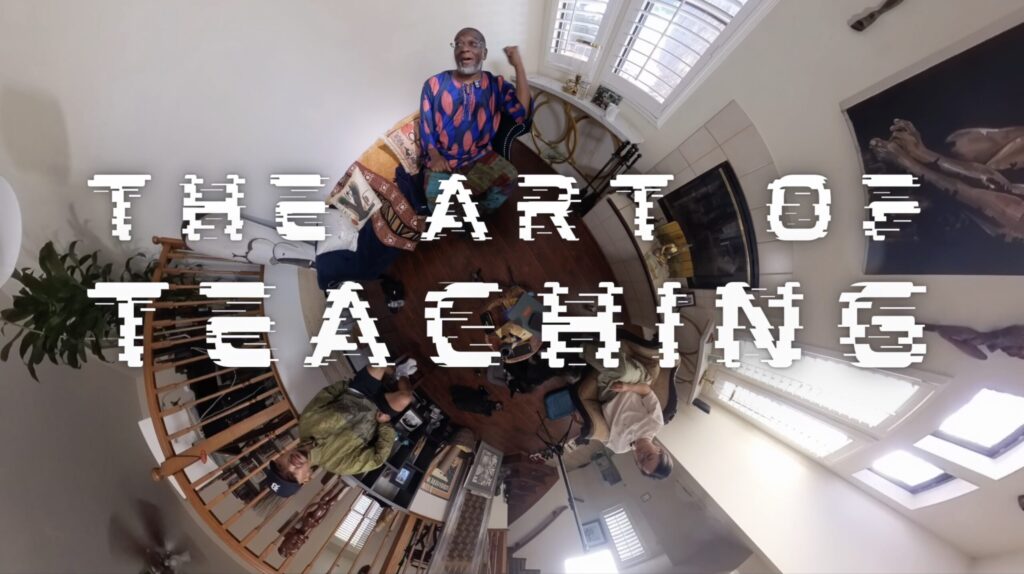
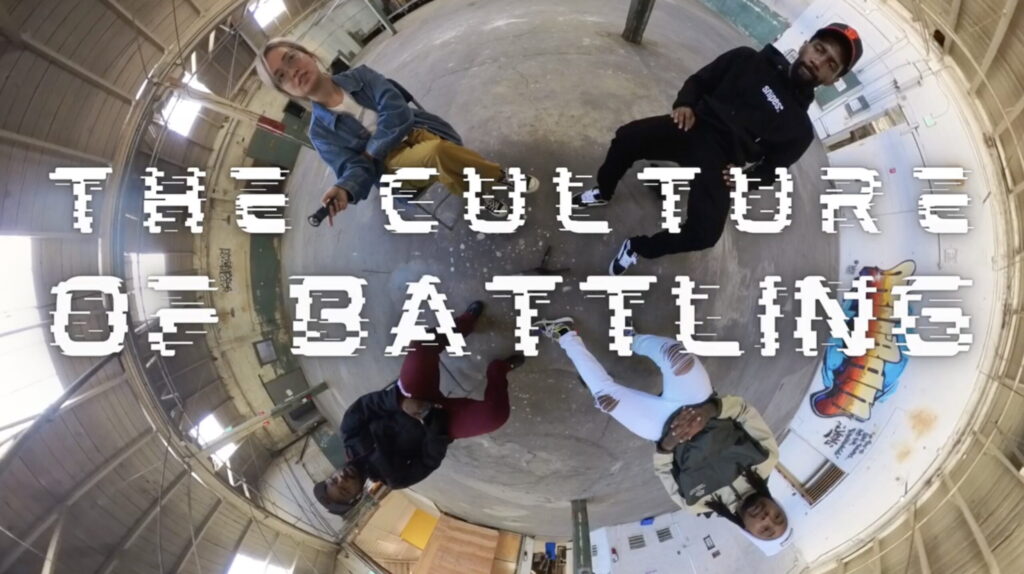
Each episode begins with an unscripted, minimally-mediated conversation filmed in a living room like setting with minimal setup (just a 360 camera that sits in the middle of the conversation and lavaliere microphones), then expands through archival footage and found media that contextualize what’s being discussed. By pairing candid dialogue with deep research, Endangered Perspectives foregrounds the knowledge systems embedded in marginalized dance practices, proving dance not only as performance, but as an archive of migration, innovation, resistance, liberation, resilience, and cultural continuity.
Over the years that I’ve spent across different universities, I witnessed how dance departments were constantly having to prove to deans, provosts, and chancellors alike that dance is a serious field of research and knowledge production worthy of resources, tenure lines, or institutional support. Unlike most other fields of study that were automatically assumed to hold intellectual weight, dance programs were frequently asked to defend their own legitimacy within academia—not because dance itself lacks intellectual rigor, but because it challenges the academy’s limited definitions of what counts as research, history, or theory.
Ironically, dance departments, while themselves marginalized within academia, frequently enacted the same hierarchy of value onto dance forms tied to marginalized cultures. Classical and contemporary ballet and its derivatives, spanning modern dance to somatic practices (e.g., Alexander Technique and Feldenkrais), were upheld as the foundation of American dance studies and as the pinnacle of research-worthy movement practices, while all other forms (which were typically grouped under categories such as “world,” “ethnic,” “folkloric,” “urban,” or “hip hop”) were relegated to the status of electives. These dance departments regularly repeated the very logic of exclusion that had been used against them.
I created Endangered Perspectives because I felt the imminent decline of “higher” education, which time and time again, refuses to adapt to the realities of the communities it claims to serve, choosing instead to hold fast to Eurocentric frameworks that feel increasingly stale and disconnected from the needs of a decolonizing, BIPOC student body. In this climate, waiting for institutional validation and funding means watching whole archives of embodied knowledge disappear. Endangered Perspectives emerged organically as a refusal of that waiting: a counter-archive that preserves endangered stories and practices while reimagining what counts as scholarship, history, and theory in the first place.
Credits:
Directed and filmed by: My-Linh Le
Interviewees include: Garion “No Noize”/”Icecold3000” Morgan, Jamauny “Scorpion” Belton, Jarell “Skeeter” Boyd, Moncell Durden, Jardy Santiago, Louis “Loose” Kee, Stacey theLighthouse Stokes aka “Mama Stacey”